Janet (with a Y) and I are developing an unlikely friendship. She seems to feel that she can confide absolutely everything in me, lowering her voice and casting a sideways glance both left and right before she begins to reveal intimate secrets about her family, friends, and employers. If it’s highly classified information, then it’s not really a problem as I can only understand about 60% of what she tells me anyway, such is the galloping velocity of her speech, peppered with Nicaraguan slang and proverbs.
Apparently where she is from, eating with the fork in your right hand will bring you bad fortune and sorrow – I think my grandmother just used to call that my bad table manners inherited from the Americans, along with “It’s yes not yeah”, and “Who’s she? The cat’s mother?” accompanied by a slap on the wrist.
I get quite distracted when Janet is speaking as she enthusiastically launches into her diatribe, so in awe am I of the speed with which she puts her words together that I find myself studying the vibration of her lips and I forget to pay attention to the meaning – not to mention that I am usually working when she comes by and unable to give her my undivided concentration.
When I heard the knock on the door today I wasn’t prepared for the zigzag scar and the gold-toothed smile standing on my doorstep. She seems to enjoy the element of surprise she wields by turning up on a different day each week, my obvious confusion amusing. It’s of little consequence to me that she comes when she pleases – I am always here during the day anyway – it’s just that, if I had a little warning, I could at least be prepared with some fresh coffee and a packet of biscuits.
I busily set about loading up the machine, which refuses to work even though the light switches on – it’s a bit temperamental and every time I write it off it cranks back into life again the next day, except when Janet comes and it stubbornly goes back on strike. I smile at her apologetically, asking if she minds drinking instant coffee.
I am ashamed at my lack of hospitality as I scour the cupboards for something to offer her. I’ve been so caught up in my life lately that my fridge has nothing more in it than hot sauce (quite a lot of hot sauce actually – six different types – Tabasco, two kinds of Jalapeño, Habanero, Sriracha, and one particularly devilish jar of homemade fire from locally growing plants, full of seeds). I also have a rotting watermelon, some cereal (no milk), and half a tomato.
I remember the story last week about the lady she goes to after me, whose house is like a pigsty, with four large, long-haired dogs that sleep in the bed with her and who she kisses on the mouth. Janet won’t even accept a cup of coffee there, as all her crockery is full of dog hair – “ay Christy es un asco” (disgusting) she groans. I wonder what she says about me. After today I am going to be known as the slovenly, unmarriable single girl who doesn’t know how to properly stock a kitchen and has an unhealthy penchant for food that burns her lips.
I feel so bad I over-compensate by giving her two sachets of lite sugar instead of one and five more minutes of conversation. I make my way back upstairs to work and she switches on the telenovela, dexterously operating the remote control that I’ve spent the last six weeks thinking was broken.
I enjoy her visits, as distracting as they are, and find the peculiar way in which she organizes my house bemusing, with the sofa facing the wall instead of the television and the toilet paper in the wardrobe. Last week she fastened the tap on the pipe of my toilet. Totally clueless about all things plumbing, the fact that it was no longer flushing water, for me meant that it was broken; until it was pointed out that the tap might need opening.
I gently ask her if she could let me know when she changes the setting on something, adjusts the plumbing, or decides to carry out full-on feng shui in my bedroom, so that I can save myself countless wasted hours looking for things. Seriously it would never have occurred to me that the remote control for the air conditioning would be better off living under the kitchen sink. She cackles with laughter and I smile, who am I to deny her these little pleasures? She’s like a different person today from the lady that I first met who brought a cloud of sorrow into the room with her. She’s opening up to me.
I was quite caught off guard on Sunday when my cell phone blared with a number I didn’t recognize. It was Janet. I didn’t realise straight away but after a few words in that unmistakable twang, I waited for her to come to her point. Not a big fan of the phone as a medium of communication, preferring instead a long chat over dinner or a few glasses of wine, I tend to only call people when I have something specific to say or arrange.
She started to giggle on the other end of the line and began to probe me about the green-eyed Italian that came by with food last week when she was here. “He likes you Christy, he’s very attentive, and he seems like a very nice man”. “Thank you,” I said, still waiting for her to tell me what she wanted. After a few minutes more it was apparent that she was only calling to gossip. My heart melted just a little.
“How’s your new grandson?” I ask – she became a grandmother at 40 last week – “what’s his name?” – “Addis… Anis… ay Christy I can’t remember” she replies, “it’s one of those gringo names”. I find it slightly odd that she doesn’t know the name of her grandson, but then, she did lose track of how many children she herself had had the other week. “None of my kids are worth a dime,” she says, “they’re all spoilt and ungrateful; they never come to see their Mum except to ask for dos rojos*.” Perhaps that’s why she’s taken to calling me.
She clunks up the stairs with the broom and the mop, chattering non-stop all the way, presumably to the air, as she is barely audible from here. She stops for breath for a moment until at last, with a glint in her eye she swoons “So Christy…”, poised to fish for more details, utterly oblivious to the fact that I’m working.
There is a sudden gurgling noise from downstairs and the coffee machine (blessed be) splutters into life. Janet takes this as a sign from God and enthusiastically bounds downstairs. I’m not so sure about God and if he’s not too busy with things more pressing than bringing my coffee machine back to life, but I do send out a grateful smile to the universe for rescuing me from an awkward conversation.
* dos rojos = 2 thousand colones (the 1000 colones bill is red) about $4
Another year, another rollercoaster ride more thrilling—and chilling—than the last. I redefined resilience again facing the fears that lurk in the shadows as they came out to play in the light. The earth shifted beneath my feet as the rug was pulled and the life I took for granted swept along with it. Not a literal earthquake like the one I lived through in Costa Rica but a natural personal disaster that rocked the foundation of my being. No bricks or debris fell from the sky, just a crushing weight of responsibility making it hard to breathe.
Fortunately, I have learned to slay through adversity like a warrior. Despite leaving the UK so long ago and retaining little of its culture, the words of my quintessentiallyEnglish father echo through my brain in challenging times. “KBO darling, KBO.” If you don’t speak British, “KBO” means “keep buggering on.” At least, it does in my father’s world. Not exactly one of those bumper sticker affirmations that incite you to seize the day; rather, the kind of gritty tenacity that overcame two world wars. We fight on—we bugger on—because there is no other choice.
Grateful for the Good Stuff
Looking beyond recent trials, there is so much to be grateful for since my last trip around the sun. I’ve covered many more miles and forged a million new memories (mostly reminiscing over old ones) with the amazing humans who have illuminated my path. Old and new, young and not so young, some of the most beautiful souls on the planet have crossed my orbit this year, sending me motivational videos when I needed them or being my wing-woman at an evening with the Sheikh in his palace. What can I say? I live an unconventional life.
I found myself back in the streets of Vancouver where I spent so many magical moments in my 20s, basking in the light of the Pacific Northwest, so different from the Middle East. I somehow shed 20 years and reunited with old best friends who had also barely aged despite the passing of time. I strolled the familiar streets like a local and passed my old apartment where I had hung upside-down from the 20th-floor balcony railings, being young, dumb, and entirely fearless. I miss the absence of fear.
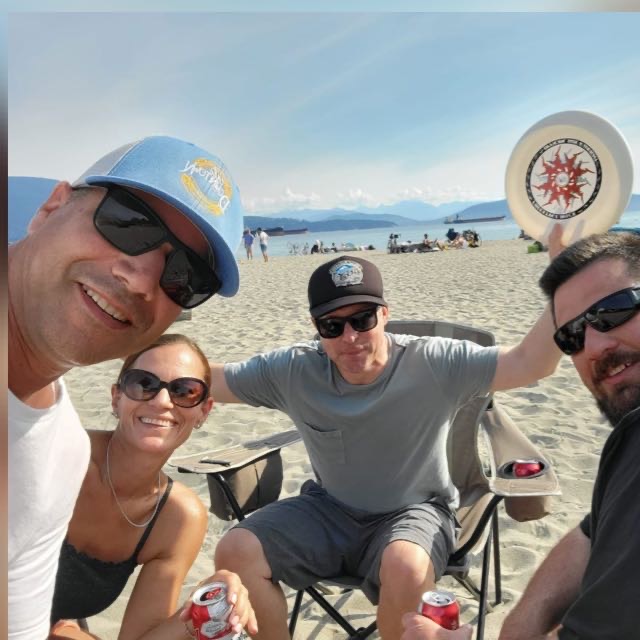
So much had changed and yet nothing at all. We drank cans of beer from a cooler as we sprawled out on the familiar sands of Jericho Beach, where the same logs were still dotted about, the squirrel population had grown in numbers, and the hostel we had slept 10 in a room welcomed new generations of travelers.
We put the world to rights once more with almost as much energy as we had two decades before and as the summer light dimmed into the evening, the memory will warm my heart forever—as will the goofy photos and age-identifying dance moves. I took a seaplane to visit my cousin on Vancouver Island flying over the mountains, forests, and the Pacific Ocean, captivated by the beauty of the land I called home. We spent a six-hour lunch filled with laughter, banter, and beers. It was every bit as amazing as it sounds.
I will preserve these memories until I am old and senile and peeing into a diaper, because in the end, what is left but the memories of the life you have lived?
Gypsy Spirt Forever
I had the honor of being the “not best man” at my best friend’s “not wedding.” I’m not sure how well my speech went but the audience was kind, and, most importantly, I still carry our deepest secrets to the grave. I’m proud as hell that one of the women I admire most in the world trusted me with a microphone on her special day.
What else happened this year? Miami, Lisbon, Bali, Oman, riding the world’s most terrifying sledder on the slopes of ‘Mount Doom’, and contemplating the neverending expanse of Zanzibar’s waters. I had a whistlestop visit to another of my soulmates during an eleven-hour layover in Dublin, where the 4-degree drizzle caught me off guard in mid-October and the conversation and laughter flowed as freely as the wine.
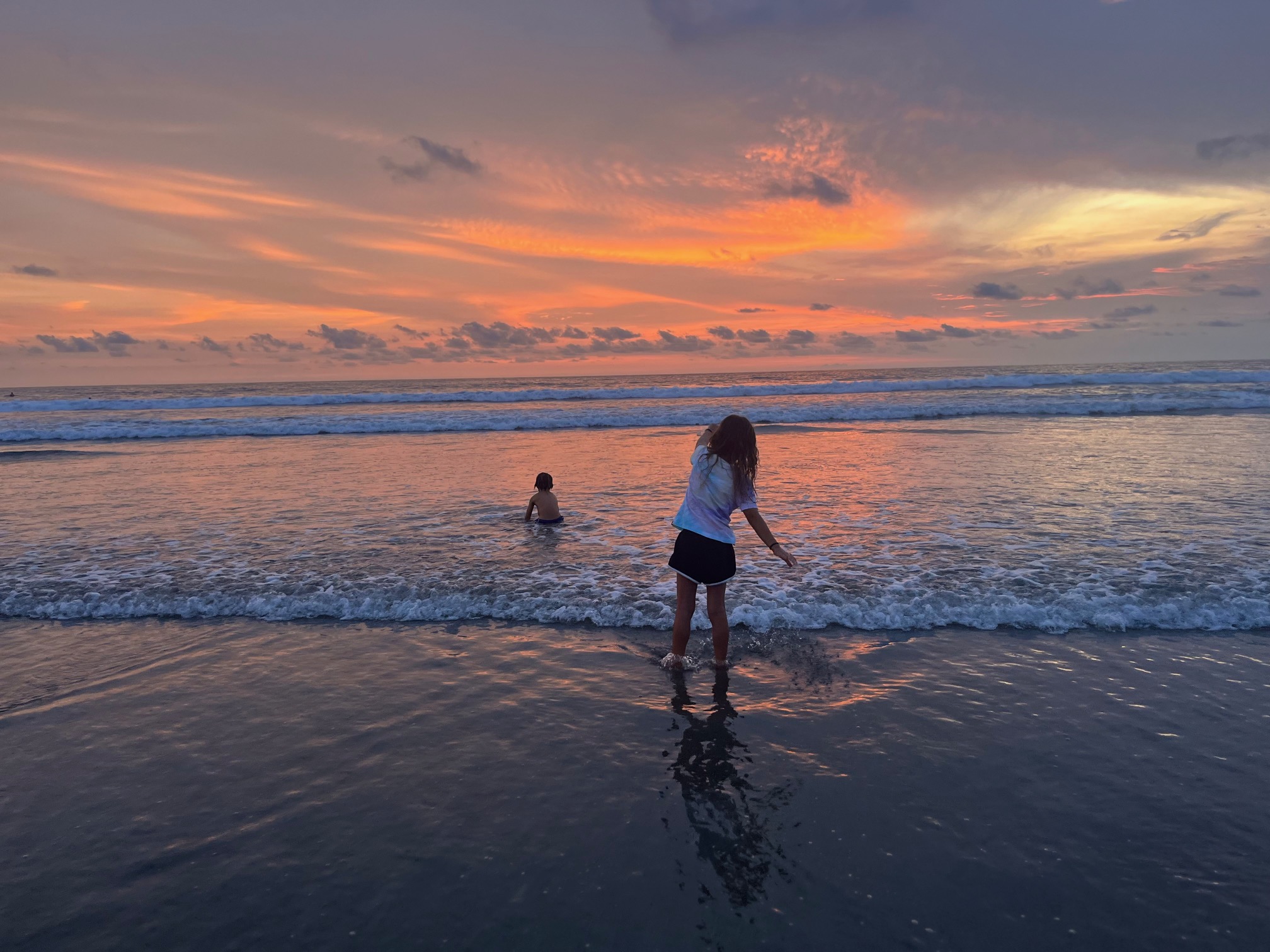
Nostalgia seems to be my buzzword this decade and Bali was like closing a chapter. I wanted to take the kids back to the place we had all evolved as people. Where my son started to run,my daughter taught herself to swim, and I found the courage to move forward.
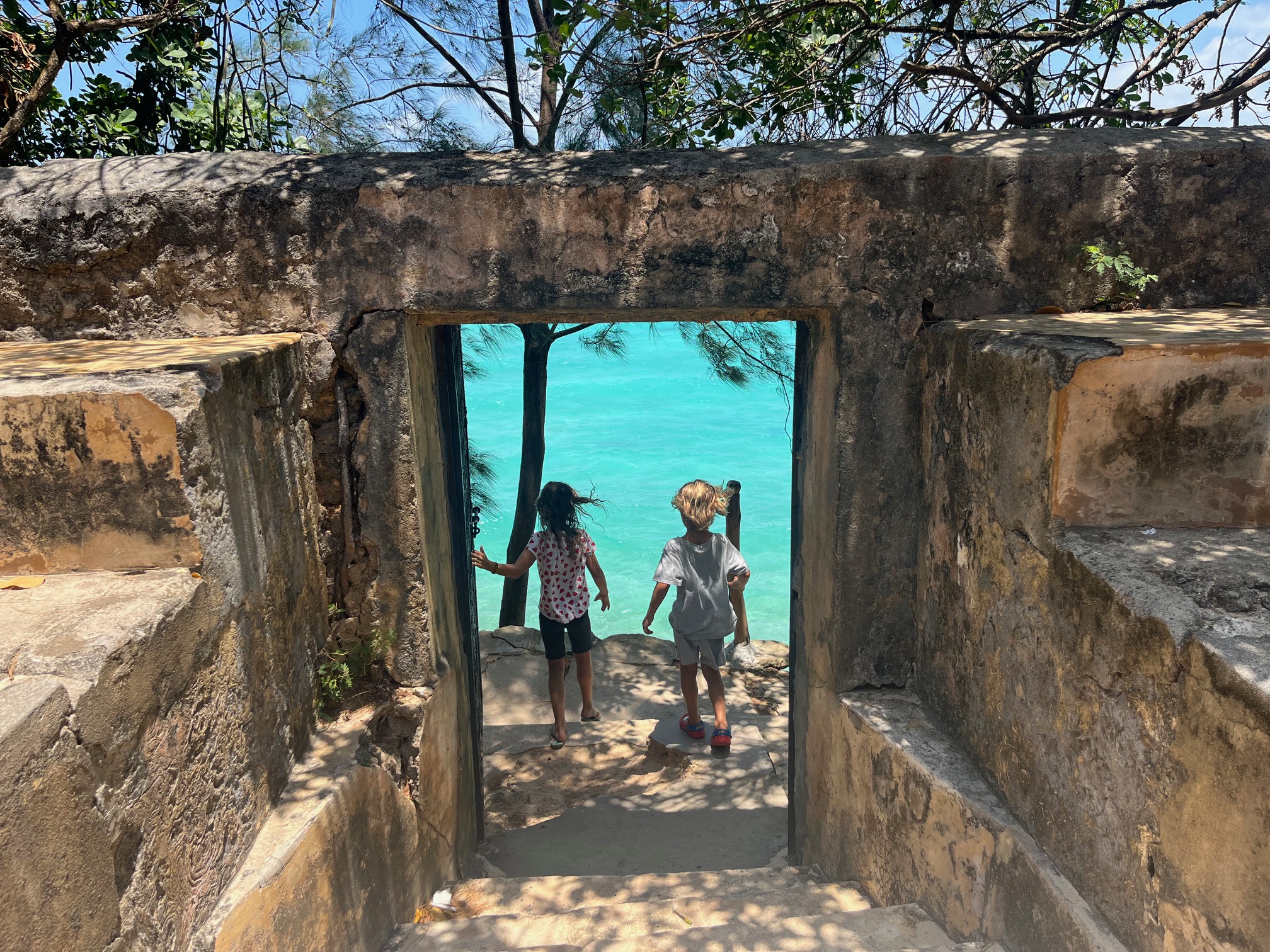
Surfing the Indonesian waves, reconnecting with special people, driving in the insanity of the moped-filled streets, and sharing a beer with Australian surfers. Bali brought a smile back to my face, but Zanzibar touched me the most. Like a forbidden fruit, Zanzibar stuns with its turquoise watersand pristine beaches, sunshine, and tropical vibe. But like a thorny rose, the beauty comes with a spine.
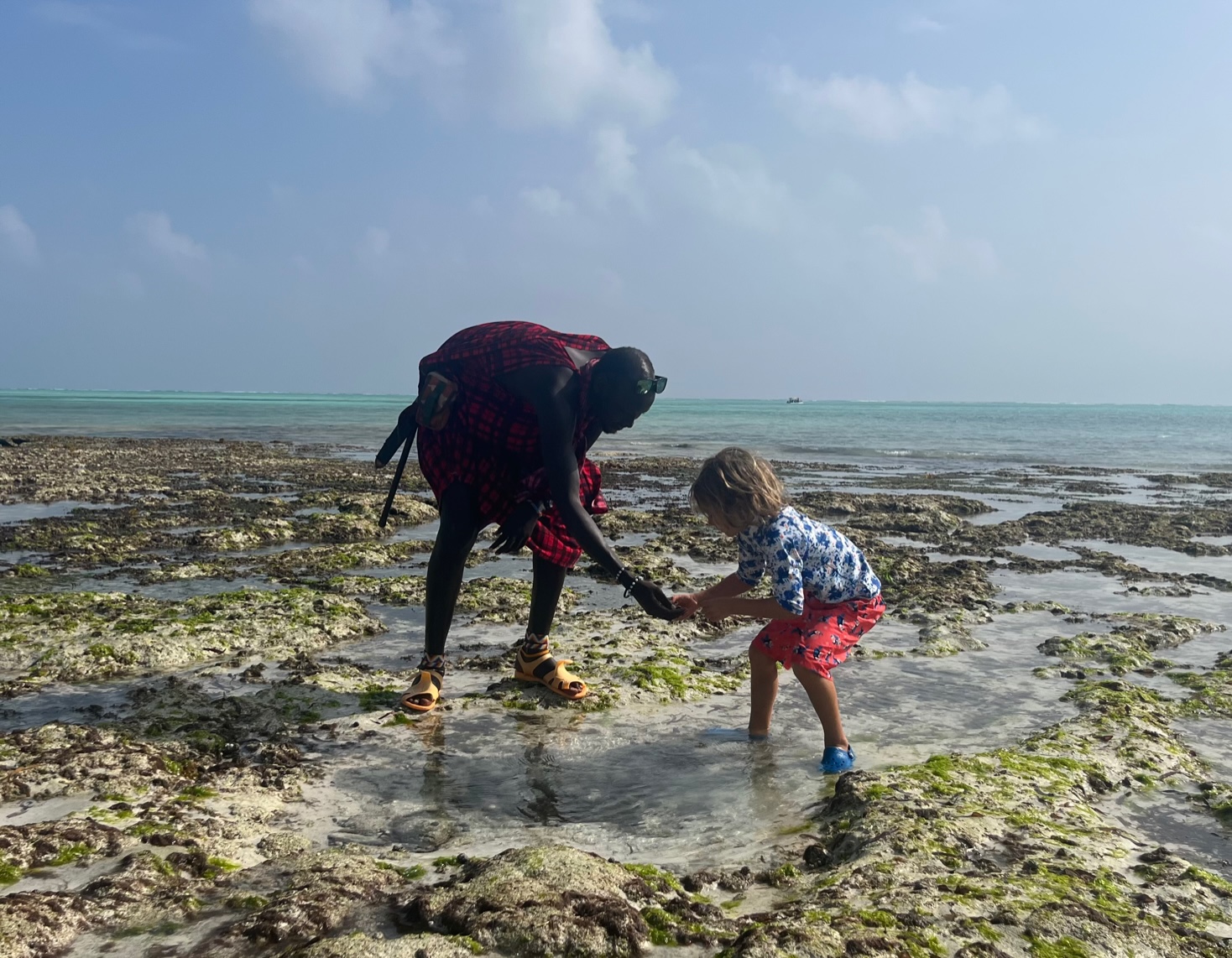
The never-ending horizon is filled with sea urchins that spike you and creatures that sting. It’s an unforgiving terrain littered with a fascinating cast of characters; seafarers, necklace sellers, mothers with babies wrapped on their backs, and seven-foot Maasai warriors, blended together in the blistering heat. The kids had never seen such poverty or experienced as much boredom with no wifi and “nothing to do” but relax and admire the view.
Zanzibar felt like a prison as I endured their ceaseless complaints and tantrums until we were all just forced to slow down and observe the snapshot of life on the East African island. We resorted to the simple things you’re supposed to do on holiday; board games, books, conversing with other guests, collecting shells and sea creatures, and devouring different tropical fruits. Time stood still and the neverending whirlwind slowed down for a minute.
The Storm That Flooded the Desert
This year brought the worst flood in 75 years to the UAE. But since Dubai was little more than a fishing village with sparse edification, three-quarters of a century ago, the damage was less intense. With highways transformed into rapid rivers and entire neighborhoods plunged underwater, I earned my boat captain stripes, pushing the limits of my Mazda beyond the recommended, determined not to let it defeat me. Then I bawled my eyes out and shook with fear as sociopathic drivers in ostentatious offroaders sped past at the speed of a bullet causing waves to ratchet at my windows.
The sun came out immediately after as it tends to do in the UAE and we were back to normal in no time despite the appearance of a few new lakes. Lucky for us, our house was unscathed and the cat managed to find his way home.
The Soundtrack to My Life
I came across this old music video from the 90s last year and it has become the soundtrack to my life. Give it a listen and then listen again. The lyrics are pure gold if you’re old enough to understand them.
Here’s one of my favorite lines:
“Do one thing every day that scares you.”
It’s made me up my game.
Here’s another:
“Understand that friends come and go, but with a precious few, you should hold on. Work hard to bridge the gaps in geography and lifestyle because the older you get the more you need the people you knew when you were young.”
The older I get, the more discerning I get with my time—and my friendships—and the more I appreciate the ones I have. I will kick off my next year of life as I end this last one with a reunion in Helsinki with more best friends from my University days in Buenos Aires. Argentina remains one piece of my life’s puzzle I haven’t put back into place. I don’t think I’m ready yet. It takes courage to seek happiness in the place where you lost it, a good friend taught me that.
I still carry la tierra celeste with me. Legendary Argentinian folk singer Mercedes Sosa sang:
“Gracias a la vida, que me ha dado tanto. Me ha dado la marcha a mis pies cansados, con ellos anduve ciudades y charcos, playas y desiertos, montanas y llanos.”
My tired feet have taken me far as well: To cities and countryside, beaches and deserts, mountains and planes. The journey ahead is still long with many more miles to go. Happy birthday to me and happy July 4 to all my American friends!
“Loss, shame, fear, and regret may they be cast down the drain. Happiness, friendship, wonder, and hope may they fall from the sky like rain,” Christina Comben, 2024.
Once you know that the earth can move and buildings can sway in the wind like leaves in the breeze, it’s like nothing you ever knew to be true really is anymore, or will ever look the same again…
The Break of Dawn
The day of the quake dawned much like any other – a little early for my liking. I pulled back the curtains, heavy eyes squinting in the morning light. The sun was already shining on the swimming pool, shimmering on the clear blue water, and the birds were chattering noisily in the trees above. A lazy iguana was stretched out below; reveling in the potent rays and the monkeys began to howl from deep within the jungle.
I closed my eyes and inhaled deeply, almost feeling the air, lightly scented with Hibiscus, breathing life into me. It was a morning ritual I had gotten so used to and yet, somehow, could still barely believe was real. This time last year I stared bleakly ahead at the mildewed walls of my dingy, windowless, ground-floor apartment, the perpetual drilling of the round-the-clock construction site grating at my fraying nerves.
No matter how tired I feel today, or the fact that I would rather be splashing around in the surf or lazing a little longer under the comforting covers of my king-sized bed, I smile at my moment of peace and the morning sun that dances on the water just for me.
If I had known that would be the last time I would look out of my balcony while the world was asleep at the glorious morning below, perhaps I would have dwelled there a moment longer, memorizing the intricate details of life from this vantage point that I would never see again.
But I’d overslept and dragging myself out of bed with ten minutes to spare doesn’t even give me the chance to shower, let alone marvel in the wonder of Mother Nature, before I start my working day. I just about manage to splash some cold water on my face and grab a garment from the closet before I hear the swishing sound of Skype as my computer cranks into life.
I throw on my tired, old, fading, floral green dress and scoop my unkempt, sun-bleached hair into an untidy ponytail. I don’t even look in the mirror; my eyes aren’t really open yet and I’ve never liked this dress – I have no desire to see how it hangs unbecomingly on my frame. It has now been officially relegated to wear purely inside the house, upon being informed that I have actually been recognized about town on more than one occasion because of its distinctive pattern.
My original six weeks in Costa Rica have accidentally extended into an undefined period and my wardrobe is failing to keep pace. I’m so bored of my clothes and I have absolutely no use for the thick sweaters and figure-hugging jeans I packed for winter in Buenos Aires. I don’t even bother to scan the room for underwear today, knowing that the clothes I washed yesterday have been forgotten in the machine since last night.
I still marvel every chance that I get at this crazy ride we all call life – its twists and turns, highs and lows. Not so long ago I painted my nails every evening before going bed and applied lipstick and mascara every morning, after blow-drying my hair and going over my lines. I squeezed my tired feet into tight three-inch heels, a suit jacket hugging my waist with the suggestion of cleavage below. I knew full well that a meeting would always go better if they fell in love with me just a little.
Now I don’t even shower before work. I’ve learned from this new timetable of mine that I am not really a morning person. My memory is thick and foggy and my reflexes are weak. I am exceptionally accident-prone. In the last couple of months, I’ve sliced open my foot from a falling bottle of Tabasco that bounced off the kitchen worktop and doused my scalp in 40% DEET bug spray before 6am. Needless to say, I no longer bother with even the most menial tasks first thing in the morning. I’m too scared to put on the coffeemaker for fear of burning the house down or breaking something more important than a toe.
Instead I sit at my desk and sift through the stack of emails that need to be written, problems that have to be solved, and ideas waiting to be nurtured. After an hour and a half of my blurry eyes on the screen I decide it’s time to get me a coffee. It’s safe now; my morning stupor has passed and I successfully load the coffeemaker, yawning as I wait for the precious black liquid to drip down into the jug. I just about have time to run up the mountain of stairs to the top floor and set down my coffee cup as a deep, unearthly groan begins to rumble from below and the ground starts to move beneath my feet.
In the Eye of the Storm
With the first shake, I don’t immediately register the magnitude of what is happening. The desk starts to jump up and down and I leap out of my chair to see the solid oak bed ricocheting towards me. The building is shuddering uncontrollably and, as I throw myself under my desk, pieces of ceiling start to fall.
The house is convulsing violently. I cover my ears at the horrifying smashing of breaking glass and the terrifying moaning of the land. In a fleeting second, I realize that this isn’t just another of those quirks and bumps and oddities that make up life in Central America – like cattle in the road or a monkey on the phone line – we’re having an earthquake and it’s totally out of my control. Oh my God, we’re having an earthquake and I have absolutely no idea what to do.
I flinch as the chair legs scrape sickeningly across the ceramic tiles and the desk I’m crouched underneath jolts up and down with increasing vigour. The coffee cup I had been drinking out of moments before and the microphone I’d been speaking into crash to the floor beside me. The wardrobe bursts open and I watch as my clothes and jewellery and make-up are shaken off of the shelves and the doors swing open and shut.
I keep waiting for it to end but the angry earth unleashes more of its fury and the jagged convulsions grow stronger. My heart is thumping so hard in my chest I can feel it banging against my ribcage and beating deafeningly in my ears. I think I’m crying but I can’t be sure – between the ceaseless pounding of my heart and the inability of my brain to process what’s going on around me, everything blurs into confusion.
The building and its contents have suddenly come to life like something out of Alice in Wonderland and I feel like I’m in the waking moments of a dream; unable to distinguish fact from fiction. Maybe this day never really started at all and I’m still somewhere in the limbo between sleeping and waking; the dying embers of the night and the bright light of morning.
The next few moments play out in slow motion, as my mind captures every terrifying microsecond, like the shutter of a camera, frame after frame. Smash… the mirror shatters into a thousand pieces, thud… my book of Italian verbs falls to the ground, slam… the wardrobe door closes again, thump… my panicked heart beats in my ears. I watch incredulously as everything that’s supposed to be solid and stable leaps up and down before my eyes and my version of life as I know it is gone forever.
Panic Rises Inside
The drywall above my head is starting to fracture and the dust in the air fills my throat. The foundation below me is creaking and the air-conditioning unit above the bed detaches from its position on the wall, suspended in mid-air by its cables. I know how to protect myself in the toughest of situations and scariest of cities but suddenly I feel very small.
My whole body is trembling uncontrollably and a creeping coldness seeps into my veins and wraps its way around my throat. I struggle to breathe and it dawns on me that I might die in this earthquake in Costa Rica. The panic rises inside. I’ve never felt this level of fear before; never shaken so violently that my teeth chattered noisily together and my hands didn’t feel like my own.
The concrete beneath me is jolting with such force that my head grazes the top of the desk. It’s only then that I realise the solid support I am huddled under is actually made out of glass – if the cheaply-built structure collapses to the ground, I’ll be sliced by its shards as they fall on me like rain.
“Get out of the building! Get the f*ck out! Salganse del edificio, get out, get out!” The unmistakable drawl of Jerry Pilsen, my alcoholic neighbor, is suddenly commanding and urgent as he repeats the words over and over; his usually shaking voice and slurring words at once unwavering and authoritative.
“Everybody Out! Get out!” By about the fifth time of hearing this I realise he’s right and I don’t want to be buried under a pile of rubble. My eyes dart towards the door where the wall above the frame is starting to split – if I’m going to do this I’d better do it fast. I decide at last to make a run for it. Pumped full of adrenaline I spring out from under the desk and propel myself towards the stairs that are swaying from side to side, as if suspended in the air.
As I leap down them in threes I feel like I’m drunk, bouncing off of the walls on either side as they move left and right while I try to go straight. As I reach the middle floor I cover my head as the mirror in the second bathroom explodes off the wall.
Finally the front door comes into sight and I fiddle with the handle for a few seconds as the plates in the kitchen cupboard rattle up and down. As I leave the shuddering building and the earth starts to settle, I am overcome with emotion and throw myself into Jerry’s arms as the tears begin to flood down my cheeks.
It doesn’t matter that he stinks of beer at 8.30 in the morning or that the few words we had ever exchanged were forgotten each new time we met. I don’t care that he has no idea who I am or that I’d seen him urinate in public on more than one occasion and his bloodshot eyes never once held my gaze. All that matters right now is that we’re in this together and the comforting embrace of another human reassures me I am not alone.
It’s a Good Day to Die Today
Jerry was the reason I was safely out of my building and today, at this moment at least, he is lucid; the earthquake has shaken him into sobriety and his arms around me offer some comfort. “It’s OK” he says soothingly, “it’s over now. I’m from California, I grew up with earthquakes and I aint never felt anything as big as that.” He laughs the deep belly laugh that usually accompanies one of his jokes.
Ali comes running towards the pool and we hug each other tightly, relieved to be alive. She was on her own as well in her corner unit that seemed a little more robust than mine. She speaks at an accelerated pace about how the second she felt the house shaking she had pretty much thrown herself down the moving stairwell flight by flight to get outside in under a second and watch the rest from the road. “I just thought – get the hell out, I gotta get the hell out!”
I don’t really know why my reaction was to throw myself under my desk when it was so obvious to everyone else that leaving the building was the most important thing. I suppose we never know how we will act when faced with a situation we’ve never had to deal with before. Like encountering death for the first time, when you move through the motions of the aftermath in a surreal dream-like state, not quite sure what to do next.
My thoughts turn to Luca and where he was, and I needed to find out if he was OK. “I’ll be right back I promise” I say leaving Ali with Jerry for a moment as they continue to chatter excitedly about what had just happened, still running on pure adrenaline. I race out into the road, my wild uncombed hair ruffling in the breeze and skimpy green dress rising dangerously up my legs – I still haven’t had the chance to put any underwear on.
As I see him coming up the hill towards me my tears begin to fall uncontrollably; the magnitude of what has happened sinking in at last. He had been on the beach out in the open and was considerably less shaken than me, but he spoke of seeing the Diria, Tamarinado’s largest hotel complex, swaying like a flag in the wind and the terrified people running outside screaming.
I had promised Ali I wouldn’t leave her for long so we go back to my house, which is still standing despite the dust and broken glass. I am about to go inside and assess the damage, look for my passport and change my clothes when all of a sudden the word “Tsunami” starts to circulate, igniting like wildfire on the wind.
Suddenly what I’m wearing (or not wearing) and the few items of value I have are of no consequence at all when a killer wave could pound its way in at any minute, decimating the village and pulling us all to a watery end. The panic about the complex starts to alight once more.
Everyone is rushing around trying to get to their cars to take them to higher ground. Luca runs for his motorbike and Ali looks for her keys as Jerry hops on to his bicycle, somewhat unstable as he starts to wobble his way out of the grounds. “It’s a fucking Tsunami, this is it! It’s 20 years over-due”. His comforting composure has suddenly evaporated as his gaze fixes upon me for the first time and I notice that his eyes are hazel – “We’re all gonna die today” he slurs, clearly he’s knocked back a few Pilsen by now “It’s a good day to die today.” The cold fear rises in me again – we have to get to the Mirador now.
… Life is spiralling out of my control. I can see the people around me as they hurry to get up high; I can hear what they are saying and register the panic and yet somehow it isn’t real. I feel like I’m detached from the situation, the same way I felt on the night of my mother’s stroke. Suddenly I’m sixteen years old again and waking to the sound of screaming – the same chilling impotence floods through me – there’s nothing I can do to stop this.
Jerry Pilsen just said that we’re all going to die and the terror in his eyes was haunting. “A bigger one’s coming“, he said, “get ready a bigger one’s coming“. I want to cry; I feel dizzy and my legs are weak as I climb onto the back of Luca’s motorbike.
Nothing makes sense anymore. I’ve just seen the impossible happen and I don’t trust in the solid earth beneath me. The handful of possessions I own in the world are inside the red house in front, whose walls have just opened up before me, solid foundations lurching left and right.
I feel weightless and I have to force myself to cling hard onto Luca as he starts to speed up and we race around the first corner towards the Mirador. I can feel his heartbeat beneath my fingertips, pounding fast.
People are cycling, driving, running in the same direction, a mass exodus to higher ground. We pass by some others who are simply on their balconies, rocking back and forth in their chairs, looking unconcerned, and watching the flurry of activity with bemusement – why aren’t they moving? Why have they decided to stay in their houses? I feel as if we’re leaving them to die as we speed past them, ever faster, and they become specks in the mirror.
The local police (if that’s what you call those uniformed children that walk up and down the beach from morning to night) are blowing on their whistles “arriba, todos arriba, everyone get to higher ground.”
It’s like being in a continued and prolonged dream state. I wonder what they will say at my funeral – she died as she lived, on one of her adventures – where would they even have the funeral? Would anyone besides my family go? I hardly mean anything to anyone anymore, beyond a pleasant, or funny, or painful memory. It will probably be months before some of my best friends even find that I’ve died in an earthquake in Costa Rica.
A million things pass through my brain as the panic and adrenaline that have consumed my body continue to rise. It’s hard to breathe. I could actually die and I’m not ready to. Is it going to hurt?
The wind is blowing in my hair and face. I look into the rearview mirror and expect to see the glass filled with a giant wall of water thundering towards us, but the town is growing smaller and all I can see is a rising dust cloud in our wake.
I am sure I have seen this somewhere before in some Hollywood disaster movie, or read about it perhaps in a fiction novel about the end of the world. The sexy, dirt-smudged protagonists escaping the scene of disaster by the skin of their teeth, accelerating away from the tearing earth behind. I wish I wasn’t wearing this awful green dress with no underwear beneath. You should always have underwear on, it’s true, you never know when your life’s about to change.
Get to Higher Ground
We pass some local surfers and people we know from around the town, a bunch of Italians, flamboyantly waving their arms up and down and some cleaning ladies, looking distressed. As we swerve in and out of the large queue of cars, I draw some comfort from safety in numbers.
We reach the Mirador and see a ton of familiar faces. The man from the supermarket, some people from the hostel and other businesses about town. I smile when I see Amada, the doctor I had been to see a few days before. She gives me a huge hug and then steps back and asks if my ear is any better. We’re all about to die and she wants to know if I’ve been taking my drops.
I see Jerry walk past, a can of Pilsen in his hand and start to wonder where Ali is. Where did he get a can of beer from, in the tearing hurry to get out? Suddenly there seems to be an air of comedy about things as more and more people arrive and we share the only working cell phone between groups of people as I call my parents. There really is no good way to say “I’ve been in an earthquake and we’re expecting a Tsunami, but don’t worry“. I played it down as much as possible, while I heard someone say it was a 7.9. That’s pretty big I think.
We keep waiting for something to happen as we stare down at a tranquil sea, no sign of killer waves in sight… The heat is bearing down and the mosquitoes are starting to bite. OK, so… now what?
I slap my hand hard down upon my leg and squash a giant mosquito; they’re larger in the bush than they are by the sea, out of the breeze. My body’s still shaking and the sun is growing stronger every minute; the sweat’s starting to form on my forehead and there’s still no Tsunami in sight.
I look around me, at once overwhelmingly conscious of my inappropriate attire up here at the Mirador, surrounded by half of the town, whose state of terror is gradually transitioning into anxiety and, even… boredom…
The fact is that humans are limited beings and our capacity to hang on to extreme emotions is finite – it’s just as hard to maintain a state of intense fear as it is one of extreme happiness. Everything is transitory, the good and the bad; time renders all those unspeakable traumas that you think you’ll never be able to live through bearable in the end.
The Aftermath and Aftershocks
The seconds, minutes, days since the earthquake have been entirely new terrain for me– I’d never experienced anything like this before and I still have nightmares where the house is moving and I can’t get out, or the plane is crashing and I’m about to die – paralyzingly terrifying situations over which I have no control.
The only similar feeling I can draw upon is that one you experience when somebody close to you dies. At first, you are overwhelmed with a grief that tears you up from the inside out as your whole world is ripped apart and you can’t imagine how life can possibly continue without them.
Then the days go by and it does go on, and you find yourself unexpectedly laughing at a joke or involuntarily smiling at the sunlight on your face. You suddenly feel horribly guilty and chastise yourself for allowing a fleeting moment of happiness in, remembering that there’s nothing to laugh about and the world has changed.
Well, it’s not the same and no one close to me died, but everything was so surreal that I couldn’t retain sheer terror and panic all of the time, yet each time I let myself relax just a little I would snap back into the gravity of the situation and then slide right out once more.
The fact that I had been caught out with no pants on in public, watching my drunken neighbour stagger around the Mirador with a can of beer in his hand – I found myself exploding hysterically and uncontrollably with laughter at the ridiculousness of the situation and then stopping suddenly, reminding myself that I might be about to die and should really be thinking about more important things than this. Perhaps it was the shock.
The Tsunami alert was called off that day after about an hour of teeth grinding uncertainty and we gradually made our way back to the town; back to the house that had been swaying like a tree in the wind just moments before, and to the little community of concerned neighbors that had formed by the swimming pool.
Ali told me that as I had sped off on the motorbike with Luca she had been overcome with pity and solidarity for her neighbor – Jerry had looked so precarious wobbling about on his bicycle that she offered to take him up in her minivan.
In the panic to get up high and the frantic scramble to clasp onto life in the face of an impending wall of water, we had all left important things behind – computers, passports, photographs, Ipods, underwear… but Jerry had grabbed Ali’s arm and begged her to wait for just one second more as he dashed into his house.
She watched nervously in the rear-view mirror, hands anxiously gripping the steering wheel, wondering if her loyalty was misplaced in honoring the wishes of this relative stranger when she had four wheels at her disposal. The seconds drew on agonisingly longer until at last Jerry emerged with what he had rushed into the broken building to save – a can of beer – just one – the Pilsen he had in his hand as he teetered around the hilltop.
“A freakin’ can of Pilsen! I’m gonna die over a freaken’ can of beer? And ONE – just ONE – I’m saving your life and you don’t even pick one up for me?!!”
And so gradually, day by day, we all got through the aftermath of the earthquake in our own ways – drinking more, not sleeping alone, keeping an emergency “earthquake kit” by the door (a bottle of water, a packet of nuts, a flashlight and (just in case we really were about to die) a large bottle of Flor de Cana). I also made sure that my most important items, like my surfboard, were safe under the stairwell, in the event that the building should collapse.
The first strong aftershock came when we were huddled around the pool a couple of hours later, not quite knowing what to do next, but not wanting to be alone. I had just about managed to slow my breathing down when the ground shook with ferocity once more and the lurching pang of terror arose in my chest again.
Jerry’s wife Yvonna, from the Czech Republic, and bratty child were there, both inconsolably frightened, eyes darting this way and that, the son whining loudly that his favorite thing in the world – his BB gun – was about to be buried inside. It did cross my mind that a BB gun might not be the most appropriate toy for a pre-adolescent, but the jolting earth took priority in my ranking of thoughts at that moment.
We leapt out of our sun loungers, ready to run for the gates but it was over almost as quickly as it had come, only a 5.6. The tears started to form as I gave Yvonna a hug and we clung on to each other for a while.
It was funny, but the good thing about the earthquake, when you took away all the trauma and disruption and fear, was that it brought me together with people I never would have thought of exchanging more than the time of day with normally, strengthening my friendship with Ali; drinking wine out of a box with Jerry and his wife in their kitchen, learning some swear words in Czech.
I didn’t tell many people this because it sounds inconceivably stupid, but I actually went surfing in the evening; the accumulated stress of that day, waiting for the next one to come was unbearable in the end. It may not have been the smartest thing going surfing on the day of a massive earthquake and Tsunami alert but catching a few waves and unlocking some of that tension in the rush of the surf was perhaps the only thing that kept me together.
Assessing the damage was hard. I learned the word for “dry wall” in four different languages. The windows that I thought had blown out in my house were in fact intact; it was only the mirrors and a few plates that had shattered.
The dust and pieces of ceiling and cracks in the walls were alarming; every time I entered the house and ran upstairs I covered my head – Jerry’s entire ceiling had collapsed next door and I didn’t have much faith in mine. Every time I went up the stairs I relived every moment of the earthquake and the staircase began to move and I had mini panic attacks when I had to get something from the top floor.
That first night I didn’t sleep a wink. We moved my mattress downstairs on the kitchen floor; I just couldn’t face the thought of sleeping under a flimsy layer of ceiling that could come down at any minute, or having to descend three flights of shaking stairs to get out. At least on the kitchen floor I would be close to the door. I didn’t want to sleep alone either so Luca stayed with me that night.
The next days went by something like that. Nothing about it was real. It’s impossible to sleep with one eye open and I was up for 62 hours straight, feeling every little tremble of the earth and like I was losing my mind. They registered more than 2,000 aftershocks in the first week after the Nicoya earthquake – the ground was continuously releasing energy.
I had motion sickness and vertigo for about ten days. Every time I walked down to the beach with my surfboard I had to compensate for the tremendous gravitational pull I felt towards the earth and the sensation that I would fall at any moment and my head would smack the ground. I had to stop and close my eyes, or stop and sit down for a moment; everything was spinning, the only place I felt any semblance of normality was in the ocean on my board.
I moved out of my house after six fairly important walls were declared unstable by a Costa Rican builder. Admittedly though, his best assessment was that it wasn’t certain the house would collapse but “solo Dios sabe eso verdad?“ (Only God really knows that for sure).
With a penny-pinching landlord whose best offer was to fill the cracks with cement and paint over them and a builder that deferred to a higher power on the safety of the building’s structure I decided it just wasn’t worth the risk. I’d never be able to sleep soundly in that house again anyway, every tremor weakening the walls a little more.
I moved into Luca’s studio, high up in the forest -I called it the tree house, surrounded by leaves and birds and monkeys on all sides. I felt safer there but getting used to the new noises was hard. The swaying of the branches outside also gave me the feeling that the house was moving even when it wasn’t –my nerves were on a knife edge – a coconut would fall from a tree and smash on the tin roof above and I would leap into the air like I’d received an electric shock.
I’m still not comfortable with any sudden noises. The rumbling thunder that menaces the night now panics me in ways it didn’t used to and with every mighty boom that rattles the window frames and makes the lights flicker I get ready to run to the door. My mind switches into earthquake mode and the corresponding adrenaline that floods through my body takes away my breath.
The worst aftershocks are when I’m inside and the furniture shakes and glasses shudder up and down. I look at the walls with suspicion now; they no longer offer the same comforting solidarity I’d taken for granted my whole life.
But as the days go by, the gravity of the situation dilutes – time as ever, the greatest healer for all ills. Each night I snatch a couple more hours of fitful sleep and I can now walk in a straight line again.
The damage is being repaired and businesses open as usual. The tide continues to rise and fall and the monkeys howl in the deep. Coconuts thud to the ground, the iguanas change their skin, people make plans, and life goes on.
Because you can’t live your life as if a giant earthquake is about to happen, in the same way that you can’t live in the constant shadow of death. After all – solo Dios sabe eso verdad…
It’s just over a year since I crash-landed in Dubai, and I still find something every day that brings a smile to my face, a frown to my forehead, or an expletive to my lips. The list of anomalies is long, and the tapestry of characters rich and colorful. Dubai may seem superficial at first, but scratch the surface just a little, and nothing is what it seems. Here are 11 observations of Dubai from a newbie — can you relate?
There is a solution to every problem
Moving countries is a headache. Doing it with no support as a single working parent is the stuff of enduring migraines. A significant logistical feat that’s as physically and emotionally draining as it is financially. Despite the overarching convenience of just about everything in the UAE, spending a few hours in the government “happiness” centers here is enough to push any sane person over the edge.
Just when hope is lost to attest your documents on the other side of the world, open a bank account, or find a reliable real estate agent, you suddenly manage to get things done, and it almost always involves throwing money at the problem. Whether it’s finding a spaceman costume at the drop of a hat or getting your visa processed quicker, there is a solution for everything.
You have to pay upfront
If draining your bank account on unexpected events wasn’t enough, the upfront costs associated with everything in Dubai will make your head spin. Whether it’s the big ticket items like rent, school fees, and furniture, or more minor things like a DEWA deposit, gym membership, or a Privilee account, having to shell out lump-sum payments for everything leaves you hemorrhaging money from every pore.
Haven’t they heard of monthly payments in the UAE? And what is up with chequebooks? The last time I saw a cheque, it was enclosed in a birthday card from my great-grandmother with instructions not to spend it all (£5) at once. As Dubai aims to be the cutting-edge tech center of the globe and the world’s first city powered by blockchain technology, isn’t this antiquated way of settling transactions a little bit at odds?
Everywhere takes 30 minutes
It doesn’t matter where you are in Dubai or where you want to go; everything takes the same amount of time, even the short trips — unless you miss your exit and run into a five-mile tailback. There’s only one thing worse than being stuck in heavy traffic, and that’s being stuck in heavy traffic going the wrong way.
Google Maps is a driving hazard
Speaking of going in the wrong direction, guaranteed to add time to your journey is Google Maps. A staple in many parts of the world, Google Maps is a driving hazard in the UAE. Until you can master keeping left and keeping right simultaneously without crashing into the central bollard, you should probably switch to Waze.
Having everything delivered to your door is addictive
When you can get everything delivered to your doorstep at any hour of the day, you suddenly want more things delivered to your doorstep at any hour of the day. Having a massage, manicure, handyman, chocolate doughnuts, or a full tank of petrol at the touch of a button is addictive — and expensive.
You get really lazy
See above. Plus, you use the car a lot more than you do at home. Why walk in the blistering heat when there’s very little you can walk to anyway and always someone willing to deliver it?
Eggs last forever
Is this normal? I don’t know what they put in eggs here, but they seem to last forever. I have never seen an egg with an expiration date so far into the future that it has time to hatch, grow up, and go to college before being consumed. Diamonds are forever, and in Dubai, so are eggs.
Bling is the thing
I was prepared for the bucketloads of money and superior styling habits of Dubai’s elite, but even the soccer moms? It doesn’t matter where I am or what I’m wearing, I am always underdressed in Dubai. When everyone from a supermarket attendant to a yoga teacher is flawlessly groomed, from the top of their perfectly threaded eyebrows to the tips of their manicured toes, you ultimately find yourself doing it, too. Bling is the thing in this part of the world, and you have to step up your game.
The school run makes you lose your will to live
Even if you’re not a parent tasked with this ad-nauseam daily duty, you’ve probably run into a school run. And you know how painful it is. If you thought the behemoth 4x4s were to go offroad in the desert, you were wrong: they’re to climb up the curbs and conquer the sidewalks so the children reach their classrooms (and Jumeirah Jane gets to pilates) on time. With yummy mummies dripping in Fendi and Juicy Couture at 7 am, feeling underdressed in a swanky restaurant’s got nothing on the school corridor, the runway of Moscow’s finest.
There are more speed cameras than people
I’m not sure if that’s an actual fact, but it certainly seems like it could be. The pimped-out offroaders may seem unnecessary, but at least they can cause useful traffic infractions. What purpose the lines of brightly-colored Ferraris and Lamborghinis parked outside the 5-star hotels serve is beyond me. When you’ve only got 100-meter stretches between each speeding ticket and mountain-high speedbumps around every residential area, your opportunities to go full throttle are few and far between.
The plumbing is really screwy
Even if you’re lucky enough to live in a more modern development, you probably have no cold water in summer. If you live in an older one, you’ll have scalding water pumping out of the shower and yellow water in your kitchen sink. The off switch does nothing to affect the temperature. The electrics are wired backward as well.
They say it takes a couple of years to get used to Dubai, but I think you could live all your life here and be perpetually surprised. There’s no place like the UAE for living your best life and being your best self —but there are plenty of speedbumps along the way.
It’s July 4 once again, and my American friends are busy celebrating my birthday. I have lots to be grateful for this year, too. It’s been an epic one. Despite my tendency to recognize the achievements of everyone but myself, even I’ll admit I did pretty good. The last 12 months have taken me from Europe to the Middle East, from lush rolling hills and wild frothy waves to arid deserts and melting sunsets.
The differences have been stark and the challenges enormous. Would I have done it if I knew it would bring me to my knees, leaving me almost financially, physically, and emotionally crippled? Would I have taken on the bureaucracy, the formidable school run, or managing our lives in two continents simultaneously while full-time working and parenting?
Well, probably, yes, let’s be honest. This permanent state of discomfort seems to be where I am most at home. And the two little ones that accompany my path are arguably even more enthralled by the call of the unknown, and the chaos and wonder of it all.
One of the kids’ favorite books is The Whale and the Snail, about two unlikely creatures that travel the world together. “She gazed at the sky, the sea, the land, the waves and the caves and the golden sand, she gazed and gazed amazed by it all, and she said to the whale, I feel SO small.” That snail is a kindred spirit. That story makes me feel so alive.
My 20-something self had it figured out when I wrote, “Nothing is more valuable than the memories I create and there is no greater gift than time.” But somehow I veered off track. I lost myself for a while. The cycles of abuse, trauma, grief, loss… life had become a burden. I felt far from the travelling gypsy with her head in the clouds and her passport in her pocket. No one dreams of falling into a bad marriage, or becoming a single parent. This journey has had its ups and downs.
Last year, I raised a glass to health and prayed for this next leap into the unknown to succeed, personally and professionally. I scrunched my eyes shut and wished to recover my sense of wonder, and I prayed for friends to celebrate my birthday with. Today, I smile as I write these words and reflect on a year with many more stamps in my passport and memories that will endure for life.
Of lush green jungles and ramshackle markets, opulent mosques and 5-star hotels. Crisp Omani bread and dancing dolphins, the clicking of geckos and the thrill of the waves. The shriek of crows circling at prayer time, Karaoke bars, bratwurst and kimchi, spluttering tuk tuks, towering skyscrapers, and expensive bottles of wine. Paddling pools, play dates and parks, breaking-down rentals, and dancing till dawn. Grinning from ear to ear at the kindness of strangers, and bawling my eyes out at the courage of my kids. Conversing with people from every corner of the world living their own stories and being part of mine. My cup runneth over this year.
Without realizing, I gave myself the biggest gift of all for my birthday last year. I gave myself back the world. I feel like a little kid again staring at the map on the playroom wall, contemplating the enormity of it all. We don’t know what our fate will be, how long we have left on this planet or how many more 4ths of July we will have. As a very wise Portuguese lady said to me when her best friend’s brain scans came back riddled with tumors, “Temos que vivir intensamente”. Let’s suck out all the marrow of life for the blink of an eye we are here.
Tonight I will celebrate my birthday with friends in Dubai. Next month I’ll catch up with more in Portugal, England, and Canada. I’m everywhere again and surrounded by people who left positive memories in my mind and immutable footprints in my heart. The roll of the dice I threw last year took me many miles further away. Yet somehow, mysteriously, brought me closer back to me.
For those of us with travel in our veins, this pandemic has smothered us like a down blanket. And if there’s one feeling I can’t stand, it’s being stifled in a mattress with the heavy bedding tucked in at the corners. It’s a suffocating feeling that temporarily induces panic in me and leaves me breathless until I’ve kicked every last centimetre of the bedding out freely and can breathe again.
Being locked down, locked out, trapped in, trapped out… Unable to make decisions or continue the way of life I always knew has been a hammer blow. One by one, the trips, the plans, and the life I was building began to drop like flies this year as the “temporary restrictions” to “flatten the curve” evolved into the enduring nightmare we’re living.
My need to be constantly in motion, continuously moving, discovering, tasting, testing, listening, learning–whether that meant changing as I grew older to incorporate the children or simply breathing in a 20-minute glance of a city during a work visit–it was still travel. There was wonder and marvel in every second of it.
Wise people say to look for the joy in the small things. To pause. To relax. To appreciate what we may have overlooked. Plenty more (wise or otherwise) wax lyrical about how lockdown allowed them to take time off and view their lives through a different lens, learn to cook, connect with family, discover a new talent, lose weight. I’m happy for them but that wasn’t true for me.
None of it was true for me.
When they said we were “all in this together” it was a lie larger than the multi-trillion-dollar stimulus package injected into the economy. We may be “all in the same boat” but some of us are rowing the oars while others are sunning on deck–and many more are falling overboard.
Forgive Me for Being Tense
I didn’t get a chance to reflect or pause or take up a new hobby. I had to lock down and work like I’ve never worked before. With travel out of my reach for the first time in my four decades on this earth, it was only through work that I could ensure the children’s future, and dim out the relentless abuse and persistent harm from the one person in my life who was meant to matter the most.
Only by throwing myself into the keyboard could I actually actively tackle this miserable pandemic that’s clipping my wings and pinning me down to the bed with the corners tucked in.
When the need became clearer to put a country between me and my past, we were finally able to move to Portugal where the children could run a little freer, go to school, and be kids.
I still wonder every day how this pandemic will affect them in the long run. My three year-old comes running out the house telling me I’ve forgotten my mask. My five year old doesn’t remember what it’s like going down a slide in a park. I’ve tried hard, but how do you recreate a world in which children roam freely and adults have visible smiles?
For my incessant efforts, I’ve been accused of being too tense, of not knowing how to enjoy life or allowing myself to let go. This isn’t a groundless accusation. It’s probably painfully obvious.
But even if I could shed the constant guilt about not being at the bedside of my moribund mother or the omnipresent pressure of having to be absolutely everything to my children, I still wouldn’t be able to do it.
My traveler’s soul is restless. And it aches.
People do their best to empathize and say they understand how hard it is. But the truth is, they have no idea what it is to be a working single mother with no help. If they did, they wouldn’t suggest I went on city walks on the weekends full of steep inclines or beach trips where I have to carry endless piles of equipment and two children who don’t feel like walking. They would stop talking to me about yoga or dinner or “something just for me” if they knew how many times my children asked for me if I’m gone during the day or screamed for me in the evenings if I’m not in the same room.
So, right now, I appreciate the good intentions. But there is no way to fix a single mother with the spirit of an eternal traveler locked in a box.
A box full of screams and shouts and bumps and cuts and smashes and breaks and spills and slips and constant neediness. A world far from the bustling streets of Marrakesh or the lofty volcanoes of Central America, the crashing waves of Costa Rica or the packed Karaoke bars of Seoul.
All the things we may never experience again.
So, yeah, I am tense. I miss my friends. I miss my family. I miss my freedom and the life that no longer is. And most of all, I miss myself all alone on the open road with endless horizon–and possibilities–ahead.
The old lady with the horn-rimmed glasses rests her head lightly on her chest, dozing in the late afternoon sun, a light snore escaping. She hears me approach, wet sandals squishing on the gravel as I pass and she eases awake, sleepy eyes narrowing into a wrinkled smile, she greets me, asking how I am.
We know nothing about each other beyond these daily exchanges, when I walk back from surf, tired and damp, flushed face and dripping hair, and she takes up her permanent position rocking leisurely on the porch watching people walk by.
There’s a sense of continuity as I pass at the same time each day, jogging her out of her slumber; it pains me to think that I’m leaving soon. I wonder how long it will take her to notice that the pleasant wet-headed foreign girl was no longer there at six a clock, indicating it was time to think about dinner.
The smells of fried fish and sounds of muffled salsa beats from the restaurants start to subside as the church bells call out for mass. Stray dogs bark in the distance and the fishermen return from the ocean with their catch, stacking their wicker boats against the seawall.
The sun begins to melt over the peer; I can see it squinting through the palm trees. All that I want is for time to stand still and let it be six o clock if only for a moment longer, so I can bask in the dying rays of the sun and the warmth of the old lady’s smile.
My eyes were glazing over from staring at the screen of my laptop too long. I lifted my gaze for a moment, just in time to see the horse that filled the windscreen; the wretched creature’s eyes widening with fear at the car hurtling towards him.
There was a sickening scrape of tires on the gravel and time played in slow motion as the petrified animal scrambled out of our path, the thick blanket of banana trees loomed ever closer and the vehicle zigzagged from side to side, like a rally car.
Amidst the chaos I could hear someone screaming and then realized a split-second later that it was me. Time was temporarily distorted; decelerated as if watching one still frame of a camera after another.
At last the driver jolted awake in time to slam his foot on the break and we skidded to a stop, my head lightly banging the seat in front, the dust clouds rising around us and the smell of burnt rubber and dirt filling the car.
The dense green foliage swayed in the breeze and there was a sudden anti-climatic silence, but for a few birds cawing in the distance and the humming of the radiator. Two campesinos bearing machetes, cutting down crops a few feet away, were staring agape with a mixture of concern and bemusement written on their faces, as they beheld the dented rental car enveloped in a cloud of dust, with a horse flinching in its wake.
This wasn’t the first time I had the feeling that I might die in this part of the world or that my vehicle had swerved off the road; at least this time there was a line of banana trees to break the fall.
In Guatemala, when our bus nearly lurched over the edge of a cliff with a blown tire, we tilted sharply to the right, the whole bus balancing on two wheels as the sheer drop below beckoned.
I saw my life flash before me to the sound of merengue music and a rosary dangling from the rear view mirror; along with several chickens, bags of tamales, rice, and brightly colored pinks, reds, oranges and yellows of the Mayan women’s clothing. It seems there will always be an animal present each time I brush with death to share a terrified glance with before we pass into the next life.
After assessing the miraculously limited damage and saying our prayers and a few hostias we continued back to Tegucigalpa. I don’t think I even blinked for the rest of the journey, eyes rigidly fixed on the road ahead, lost in thought about how I’d come to be here, working in a country like this where a simple journey could turn into several hours, on a constant look-out for bandidos, or gaping crevices in the road and stray animals that wondered into the path.
Working mostly 12 hour days, running around in three inch heels giving interviews, breakfast meetings at 7 am, night-time appointments in coffee foundations on the outskirts of San Pedro Sula, imagination running wild as the gun shots in the distance felt uncomfortably close.
The daylight began to fade as we finally approached Comayaguela, the gateway to the city that also happened to be the most desperate part of town and not where you wanted to be after dark, lost in this rats nest of dead-end alleyways, closed streets, road blocks, one ways, crack addicts, thieves, ghosts of people with vacant stares, shoeless children with gammy eyes, houses without roofs, shops without doors and far too few police to maintain order.
Nerves on the edge of a knife, I’d been awake for almost three days and tomorrow we had an early meeting with the Minister of Communications, an ironic misnomer due to the fact that he was the hardest man in Honduras to get hold of.
How would I go in to that appointment as if nothing had happened today; as if I wasn’t exhausted and my clothes weren’t damp and dirty shoved into a rucksack, my suit jacket left hanging on its perch from Friday night, that felt like an eternity ago now.
Still… how else would I be spending Sunday if I were anywhere else but here? What’s the point in being alive if you aren’t reminded of your own mortality from time to time? Even if it is by a horse.
Just one foot on the street outside and I’m transported into the bustling world of Milan. The smile spreads across my face as I feel like an extra in a Puccini opera, the protagonists around me sing in their flowery tongue, hands waving emphatically in the air, their conversations sound like arias.
An overweight baker with a mustache that turns up at the corners rubs his hands down on his floury apron, shouting to his assistant at the back of the shop, who throws his hands in the air, as a signora in a fur coat awaits impatiently to be served, eyes hidden behind over-sized, dark designer sunglasses, despite the light grey drizzle outside.
A workman atop a ladder is fixing a cable and calls down to his colleague below – “bellissima” I hear as I pass by, as he brings his thumb and forefinger to his lips and kisses them. A group of children on their way home from school giggle and chatter at the scene; a tapestry of characters that mingle in the street outside my apartment.
Their clothing is impeccable. Even in the more ethnic neighborhood where I’m staying, where there are large Latin, Arab, and Asian communities, the people are markedly better dressed than in other cities of the world.
Even the Chinese – who’ve stamped their trademark curiosity shops stocked with everything from herbal remedies to Hello Kitty mugs – are stylish in Milan. Theirs may be a ripped-off version of Fendi, but the lady behind the cash desk in her faux-Versace scarf and mock Burberry boots has an air of class about her as she serves customers in her unique blend of Chinese and Italian.
Milan may not be up there with Rome with its crumbling monuments, ancient coliseum and iconic landmarks, but its grandiose streets and elegant buildings, glassed-ceilinged galleries, and immense central station with works of art dating back centuries on the walls give it another character all of its own.
The high-brow fashion houses that line the “via Napoleone” and the plethora of shoes, clothing and accessories stores wherever you turn make Milan arguably the style capital of the world. I have never seen so many designer shops one after the after, and I do my best not to gawp as I stroll by, humbled by the exquisite outfits that fill the windows, exuding taste and beauty. Prada, Luis Vuitton, Gucci, Versace, each one offering not just a better way to dress but access to another life.
Roberta, the lady I’m renting the apartment from here warned “Milano è molto buona per gli occhi, non va bene per il portafoglio” – Milan is good for the eyes, not for the wallet. I can certainly confirm this as during my short stay my credit card has been stretched to its limits, I can almost hear it groaning as I punch in the pin number with each new purchase.
In Milan’s spotless streets, with not even a cigarette end or sign of litter anywhere, a public transport that runs like clockwork and urban ticketing system that allows commuters to use the bus, metro, tram, and train, there is an overriding sense of order and modernity.
It’s a city that works, looks good and feels pleasant to walk around. Its compact centre is easily explored on foot and provides a constant delight for the eyes as narrow street after narrow street deviate from the large plazas filled with tourists to reveal old fashioned chocolate shops, a hidden pizzeria, antiques and leather goods, and shoe shop upon shoe shop, filled with all styles, shapes, and colors.
I stumble upon a children’s toy shop with one-of-a-kind pieces made in wood; an old rocking horse with a flowing mane; Pinocchio puppets and ladybug boxes and hand-painted signs for bedroom doors. The seller explains to me that everything I see is made by hand by his mother. I ask him if he designs the toys as well, to which he answers – “I can’t even draw a stickman” and smiles. My Italian may be a little clumsy as I fumble through the conversation, but I get my point across and more than that, delight in the words as they roll off my tongue – “bongiorrno”, “ciao”, “va bene” and “arrivederci” are just so much fun to say I giggle inside as I hear them.
Cars actually stop for pedestrians here, something I am no longer used to, as all across Latin America, with perhaps the exception of Chile, motorists have undisputed right of way and cars will mow you down in a heartbeat. My left foot still aches when I walk too much after being run over in Buenos Aires on a zebra crossing with my right of way.
I walk to Moscova to see a different side of Milan, undoubtedly the area in which the wealthy and powerful congregate. The streets are lined with swanky bars, upmarket cafés, and fancy restaurants, beautiful people sipping cocktails on the sidewalks next to heat lamps, the weather unseasonably chilly for May. I stop for an aperitif at café Redesky, and try “spritz” a local tipple; a “must-have” when in Milan.
The elegant women exude sophistication, head to toe in Armani, expensive jewellery and 4-inch stilettos, on which they stand for hours and then somehow negotiate the cobbled, puddled city streets with ease, over-sized purses on their arms. The men are also immaculately groomed with coiffed hair, manicured nails, ironed suits, man bags and scarves, stepping out of their Mercedes, and cooing “ciao” to their friends, knowing how to make an entrance.
The roar of an engine and a red Ferrari cruises by, purring beside the bar for a few moments just long enough for all heads to turn. In the hour or so I spend there, captivated by my surroundings, the streets fill with Porches, Alfa Romeos, BMWs and Bentleys. This is definitely Damian’s kind of place and I hold back the tears as I think of how much I miss him.
Vespas speed by every few seconds to distract me and almost every cliché I had about Italy comes true before my eyes, as a woman in a fitted suit and heels manages to hop on the back of a motorbike with effortless grace and without losing composure, Luis Vuitton bag over her shoulder and a little kickable dog on her lap in a Dolce and Gabbana jacket.
The places where the photo snappers gather, such as the Piazza del Duomo, Milan’s landmark cathedral, are rather less exclusive, and Senegalese umbrella sellers mix with loud American tourists, Pakistanis selling roses and Romany gypsies aggressively begging for money and cursing at those that don’t give.
It’s difficult to see the signs of crisis here, but then the centre of any major city still hums with commerce, despite the bitter laments of Europeans about times being hard. It’s true that distance yourself a little and you begin to see empty businesses for rent or for sale, shops boarded up and just a pinch of the extended effects of austerity.
The majority of Italians in this region don’t live in the immaculate centre with a population of just two million, but in the outskirts and surrounding villages from which they commute. These are the people with their salaries frozen and benefits cut who don’t share in the lives offered in the window displays or frequent the expensive restaurants.
Yet their inherent passion for all that is good in life – love, art, food, style –make Italy my kind of place, with its leaning buildings and sinking cities, shaky economy and scandalous politicians, they still manage to live the Dolce Vita, savoring every drop out of life from their caffe to their gelato. I leave Milan with heavier suitcases and a lighter heart, even when things get really tough, there’s always something to smile about and life feels better in a pretty pair of shoes.
I make my way slowly along the cobbled streets snaking down to Oporto. It’s an explosion of colors and sounds. Bright fabrics hanging from market stalls, elaborately embroidered scarves and blankets, table cloths and intricately painted Spanish abanicos.
Día del San Isidro and the Madrileños are out in force. Crowds mingling, conversing cheerfully and soaking up the spring sunshine. Everywhere my gaze goes there’s something else more tantalizing to hold my interest. Children laughing and playing, gnawing on candy canes and florescent green and orange toffee-covered apples. Playing catch and jumping through skipping ropes.
There are women and men dressed in traditional costume. Poker dot dresses buttoned up to the neck and laced with frilly full petty coats, fanning out above their knees. They have flowers in their hair, which is pulled back austerely with jet black clips. The men wear berets, strategically placed over one eye and flowers in their breast pockets.
A swishing of materials; a clacking of castanets, every now and then they break into dance, stomping their heels on the pavement and circling their partners with smoldering eyes.
In parque San Isidro there is a make-shift fun fare. The sun is shining at last, heating up the icy air. The grass is strewn with people drinking sangria from plastic glasses and nibbling on patatas bravas, meat on skewers, sausage rolls, and sticky popcorn. All the talk of “crisis”seems far away in the face of such an abundant feast.
The Spanish really know how to enjoy themselves and today it’s the patron Saint of Madrid that is responsible for the throngs of people and general merriment. There’s something on offer today for every pallet.
To the left, refrigerated containers bursting full of muscles, crabs, octopus, and other interesting-looking sea creatures. To the right, little stands selling bollas of bread the size of tires, loaded with dried fruits and nuts. The largest paella dish I have ever seen, enough for a banquet of hundreds, is a blend of ingredients – chicken, rabbit, rice, peppers, vegetables and squid. Too big to place on a table, the paellara has a stand of its own.
This is a true slice of a traditional Spanish fiesta. Yet as we wind our way up the narrow streets to La Latina and rest our weary legs in a small plaza next to a softly trickling fountain, we were served tinto de verano (red wine with lemonade) by a smiley, gap-toothed Colombian waiter. That’s what I love about this city. For much as it preserves its glorious Spanish-ness; festivos, bull fighting, flamenco, football, and incessant smoking; there is diversity here.
You hear different languages in the street as you walk around. There are gatherings of international communities, Irish bars and Latin American hangouts. You can escape the constant hardness of the people with a mojito in a Cuban bar off a tucked-away side street. Escape is sometimes necessary here as the Spanish come off as rude; their patience thin for people who don’t know how to order a caña.
You have to shout what you want as loudly and abruptly as possible, with no effort to smile and never saying please. One moment of hesitation will invite a loud huff from the waiter. Before you can say vino tinto, he’ll be at the other side of the bar serving someone else who does understand the system.
This general unhelpfulness is endemic in Madrid and spreads beyond the tavernas. Shop assistants, in the main, are sullen and intolerant. They sling your purchase at you whilst chewing loudly on gum and looking in every direction other than yours, determined not to make eye contact.
Commuters have absolutely no etiquette on the metro, as they squeeze and force and, at times, stomp over you to get a seat on the train. And it is a rare thing for someone to offer help as you struggle up flights of never-ending staircases with an over-sized suitcase.
The argument of Spanish food being the best in the world, for me is wearing thin. I challenge anyone to stand up in defense of a plate of fatty oreja (pig’s ear), ensalada russa (potatoes and frozen vegetable salad, at times even complete with beads of sweat as it’s been in the sun too long) or greasy bowls of potatoes and ketchup accompanied with stale bread.
However, protest as I do, I have to confess that I secretly relish the complementary chunks of bread and salami and salted crisps with slivers of sardines on top in the numerous old man bars. Where everything is thrown on the floor and you feel the crack of peanut shells beneath your feet as you walk in.
I relish the exhaust fumes from traffic heaving through the streets, the grit of the metro and the tired faces that stare listlessly ahead. Street performers that burst into your carriage and opportunistic vendors that cluster outside the entrances selling umbrellas at the vaguest promise of rain, or fans, when the heat starts punishing. The noise, the din, the chaos and the overall human interaction that embodies pure… life.








 Gypsy Spirit